All posts by lesley

Should auld acquaintance be forgot…

friendship poppies

I’m not really a party person – never have been. New Year’s Eve became many years ago one of those occasions I prefer to spend alone. Partly because there are still the faint stained shadows left of terrible New Year’s Eves when dreams and expectations were cruelly shattered at the very worst time – but more because I’ve come to value it as a time for quiet, private contemplation. For a number of years I would wait till midnight and then lay Tarot cards as an aid to reflect on the year gone by and the one yet to come. I don’t do that now. It feels these days as though my unconscious doesn’t need much prompting to bring to the surface those gems of insight.

This past year, since the very start of 2014, I have been immersed in writing – a process which continually encourages my unconscious and conscious to hold hands and reconnoitre. Typical of my ‘Let’s do it right now, and don’t hold the horses!’ Gemini personality I threw my intellect into the whole mind-bending process of publishing on kindle, creating a blog, rewriting my website, reframing my public profile and identity, leaping headlong into facebook and twitter, and behind the scenes not only preparing recently completed novels for publication, but dipping into the deep inkwell of the muse to create something entirely new. Looking back, I am astonished that I achieved so much in so relatively a short time – despite prolonged bouts of illness and the exhaustion left in its wake. (But don’t let’s dwell on that.)

(‘Yes, please, PLEASE let’s dwell on that’ says my body. But as usual I reply: ‘Look, you’ve already made your point’, and tell it not to make a fuss.)

More importantly than any of the above, it’s been a year during which I have unexpectedly made genuine connections with people through social media – something I would have once claimed was impossible. Out of those connections some real friendships have evolved. Not the kind of friendships where you hang out for hours and drink tea and set the world to rights, but the kind where you exchange not just thoughts but feelings, where you empathically bond and offer solace and support. ‘Keep it real’ has been my mantra ever since I crossed into the unknown territory of virtual reality. It’s been my mantra all my life, and is a recurring theme in my work as a therapist and in my writing.

What, after all, are we protecting when we pretend to be other than we are? And is it the best kind of protection to develop a false persona? The answer for me is emphatically no. If anything, I err on the side of being a bit too open and honest about myself – but that’s ok. I’m only another one just like you – a different storyline, perhaps, but the same core human needs and responses. It’s the human frailties of each of us that invariably touch me the most – how hard we strive to be the best we can for one another and ourselves. Falling over seven times we manage mostly to get up eight – and we encourage one another never to give up hope, even when we are at our most hopeless.

What has marked 2014 for me has been the often shocking accumulation of hopelessness on a global level. John Donne wrote in 1624: ‘Each man’s death diminishes me, for I am involved in mankind…’ And so it has felt, watching wars unfold and lives destroyed, at times despairing for all humanity. Will we ever learn? Is peace possible? What will these war scarred children make of their future? Happiness has felt unattainable while sensing the pain of those dispossessed by conflict, tragedy, sickness and bigotry. There seems so little to do except express outrage and sympathy in equal measures, and practice a deeper compassion right here in my own back yard where I can at least witness its healing effect.

In my mid sixties now it’s not surprising that I have experienced a fair degree of personal loss in my time. Friendships can end for various reasons, and relationships don’t always work out. People move away, passion shuffles off with an apologetic backward glance, Titania wakes from her trance of infatuation and sees the asses head for what it is… I’ve become philosophical about all that. What endures is worth having. Some friendships have lasted almost thirty years, and some relationships have miraculously turned into beautiful friendships with fondness for the way we were. But some losses are not meant to be shrugged off, and I suppose as I get older I must get used to more of them. When a friend dies it’s as if a piece of your self has been torn away by time. You shared part of each other’s history and held it safe, like a much read book you could always take down from the shelf and revisit with affection. A friend I have known and loved for twenty five years died just before Christmas, and it’s reminded me how brief it all is, and how meaningless it would be without those special connections we make and the memories we spin out of times we shared and truths we confided, and love we felt.

The greatest gift we offer one another is that fellow feeling, the random kindness that springs from such a deep well inside us, that reaches out to touch another being with gentle words and a soft smile, and the innocent trust of a child. With our friends we can relax and share it, knowing we will not be rebuffed, that we’ll be accepted fully for who we are, with our crooked hearts and our never quite healed wounds. One less friend in my world, in spite of all the new friends I have made, is a small grief that sits heavily in my heart, even though I know he was ready to go and had suffered enough. What I remember most about him is his kindness, how much he cared about everyone, how much healing he brought into the world.

So here we all are, teetering on the brink of another year. I will bring to it what optimism I can, and remember that happiness is a choice and that to be here at all is a miracle, a blessing and a gift. And so to complete my refrain, in the familiar New Year tradition, let’s tak’ a cup o’ kindness yet, for auld lang syne…

Yoni’s mouse

Yoni-blog

If you remember, in my last post I mentioned an intrepid mouse that narrowly escaped death by cat. As it turned out, it didn’t perish after all. I waited almost a week for the tell-tale odour to indicate its passing, and meanwhile cleared up the remains of several more ‘gifts’ from Yoni that hadn’t fared so well. Emailing details of this to a friend she replied: “We had 15 dead birds in our house over the last year, and a blood bath on the carpet – got the carpet cleaner in and two days later on the same spot found another half dead blackbird, with blood and feathers all over the place.” As you can imagine, reading these gory details made me feel so much better.

I started to wonder whether Yoni has some form of Attention Deficit Disorder (along with all the other adverse personality traits) that causes him to be so easily distracted. He’s not really a dedicated assassin, more like a playful clumsy boy with instincts he hasn’t entirely mastered yet. This charitable interpretation of his behaviour is the basis for my continual forgiveness anyway. He isn’t really a murderer, is he? There’s nothing remotely personal in it. He just takes the game a bit too far sometimes. Well, always, if I’m honest.

And then the morning came when I opened the kitchen cupboard under the sink and saw a trail of mouse droppings weaving a path through the multiplicity of cleaning materials, there mostly for decorative purposes since I rarely clean anything. This was the golden opportunity for that cupboard to get cleaned, even though I dreaded finding a small corpse at the back of it. How can one person accumulate such a huge variety of spray containers of stuff for cleaning every conceivable surface? And when did I ever realistically believe I would want to polish stainless steel or add extra whitening to my washing load?

I followed the track of the mouse as I removed every item, using one of the sprays to disinfect as I went. Finally I came across a half chewed J-cloth and a tiny sieve (why did I ever get that? What would I even use it for?) filled to the brim with mouse droppings. Ah, finally it had been assigned a purpose! That intrigued me. Had it been designated a latrine for some arcane reason best known to the mouse, or was it simply the right size for the job? And the chewed J-cloth just broke my heart. Was it that desperate for food? Or was it building a nest? Suddenly my propensity for anthropomorphism kicked in and I started to over-empathise and worry about the mouse. I visualised it, isolated from its family, hiding out under the kitchen cupboards, subsisting on dust and J-cloths, pining for the water-logged fields from whence it had been dragged. I began to think of it as plucky and resourceful, making the best out of a bad situation, much like Anne Frank in Amsterdam during the Second World War.

I was relieved when the entire cupboard had been laid bare to find nothing but the vast amount of droppings as evidence of the mouse’s sojourn there. Perhaps she (by now it was definitely a ‘she’) had escaped somehow through an unseen hole under the sink unit and found her way back to her real home? I could but hope. The following morning I opened the cupboard again to take out the washing up liquid (I’m not an entire slob) and saw more droppings. She hadn’t escaped, then. Good on her, I thought, although I was a tad irritated by the need to clean up after her again. Then I opened the drawer under the sink to get out a tea-towel (I’m reasonably domesticated in some areas) and there she was…

We stared at one another, transfixed, for one of those breathless nanoseconds where you wait for your fight, flight or freeze mechanism to remind you of the animal you really are, and then she opted for flight, while I froze. Too late, I pulled the drawer wide and called out: “Anne! It’s ok! I’m here to rescue you!” She had already leapt from the back of the drawer down into the murky depths of the underworld beneath the sink. Yoni, meanwhile, was sleeping on the sofa, in that enviously profound state of unconsciousness that cats do so well. The mouse had looked suspiciously well fed, and I wondered whether it wasn’t just the cat down the road who was as usual blatantly stealing food from my boy’s bowl, but perhaps the mouse who had also developed a liking for it. Anything had to be an improvement on J-cloths, after all.

As the days passed, Anne and I developed an intuitive rapport. I would cautiously open the drawer with my mouse rescue kit at the ready and find a fresh pile of droppings decorously placed at the front. There was soap in the back of the drawer and I realised on seeing the tooth marks and shavings that Anne was desperate enough to survive on it. I felt racked with guilt. This mouse had set up home amid the squalor of my kitchen cupboard (admittedly remarkably much cleaner now) and I couldn’t even offer her a decent meal. I couldn’t bear to think of her starving, but I couldn’t possibly set a trap for her… or could I? I went out and bought a humane trap, designed to lure the mouse inside and then keep it there before being escorted back to the wild. Excitedly, I cleared the drawer of everything but this, and waited.

The next morning I discovered that Anne was cannier than I had realised. In spite of the ingenuity of the trap, which was weighted in such a way that a mouse stepping on to the feeding platform automatically caused the door to shut, she had got in, eaten the food, and dashed out again. I decided to seduce her with tasty morsels, and possibly fatten her up enough to slow her down. As the days went by this became our ritual. I primed the trap initially with cheese, then after some research found it’s actually not good for mice and peanut better would be preferable. Twice every day I laid the bait. Twice every day Anne exchanged it for healthy looking droppings in a corner of the drawer. I never actually saw her face to face again, but her calling card was evidence enough.

After a week of this I’d resigned myself to the fact that I actually had a pet mouse I kept in a kitchen drawer. I felt embarrassed. This had to be resolved. I went out and bought another humane trap. I tried to think myself inside the mind of a mouse. It’s hard enough with humans. At least there I have some clues in my own thought patterns and behaviour. This time I primed both traps with dollops of irresistible peanut butter. Surely one of them would work? I tried to imagine the frame of mind a mouse might be in with a full belly and an insatiable desire for derring-do. Would she risk the second trap just because she could? “Go girl!” I cheered her on in my own mind, almost believing that by now we had telepathic contact. (All right, I agree – I really should get out more.)

In the morning I opened the drawer as usual. There was always a moment’s frisson of expectation, so far each time dashed. I checked the first trap and once again it was resoundingly empty. One stray dropping fell out of it as I picked it up. Sighing, I lifted up the second trap and noticed a faint suggestion of heaviness. I gently shook it, and there was definitely something inside. However, I’d been fooled a couple of times like this before and been disappointed. Imagination is a deceptive magician well practised in raising false hopes. I carefully carried the trap out of the kitchen and into the garden, shutting the door behind me to keep Yoni well out of the way. Gingerly, I placed the trap close to the ground and raised the closed flap at the front. Nothing happened. I crouched down, lifted it to eye level, and began to look inside – but at that same moment the mouse leapt from the trap, bounded across the flower bed and through the fence to the precarious future beyond.

“Anne!” I called out after her. “Take care. It’s a wild world out there!”

Not even a glance over her shoulder. Not one gesture of thanks or regret. I think I may have shed a little tear as I went back inside to disinfect the drawer for one last time. I would miss her.

The Chronicles of Yoni

Intellectual Yoni

Anyone who knows me is forced into a love/hate relationship with my cat, Yoni (Full name Yin-Yang Yoni, but don’t let’s stand on ceremony.) He is very clear about who is in charge around here, and I have learned to know my place (preferably on pouch-opening and kibble serving duty by the food bowls.) I used to spend my reclining hours in a room which I jokingly referred to as the Mistress Bedroom, slightly dominated by a conveniently Queen sized bed. That’s his room, now. I have conceded defeat. He tends to leave the room in a huff rather than move over if I ever attempt to reclaim the territory. Fortunately there is more than one bedroom in my house – although as all cat slaves will know, every room in a house is a potential bedroom for a cat. He also favours my chair in the room I use to see my therapy clients, and I must admit looks quite at home there, his inscrutable gaze and Buddha-like composure well suited to the role. Would it make much difference to clients if instead of shoving him out of the way to sit there I simply left him comfortably in situ to listen to them? It’s an experiment I haven’t so far dared to make.

I get the feeling he mostly tolerates me, and have asked myself a few times why I picked such an obvious loner from the litter of mostly friendly purring kittens. He was the one squealing with aggrieved insecurity as his mother showed clear preference for his cuddlier siblings. Perhaps we simply understand one another. He refuses to do anything as girlie as sit on my lap (I did think he was a girl initially until nature proved me wrong, and by then I was already committed and a bit in love with him.) However, when I’m sitting in an armchair with a furry rug at my feet, he will settle himself on the rug, paddle his feet a couple of times in the fur to get that mother cat buzz, and then look at me pointedly until I get down on the floor and provide a space between my legs for him to snuggle inside. It’s not the most comfortable position in which to relax. Not for me, anyway, with my bad back. However, I willingly trade-off one kind of comfort for another, as there is something infinitely consoling about the mutual appreciation between one barely tamed creature and another. They never could entirely domesticate me, I’m happy to say.

One morning a few months ago I got up at 6 a.m. for no better reason than that I was bored, having been awake since 4:30 contending with the continuing effects of a bout of pleurisy. “A nice cup of tea,” I thought optimistically. “That will help. And maybe then I can drift off again for a while.” But no, it wasn’t to be. I’d no sooner opened the kitchen door when Yoni came bounding in through the cat flap with a mouse dangling from his jaws – a very sweet, very alive and wriggly field mouse. “Put it down!” I yelled, as I invariably do. I had my mouse rescue kit ready. This comprises a large plastic tub originally containing soup and a piece of thin cardboard. With enough speed and dexterity it works. There was a time when I used to pick up the dear little creatures in my cupped hands and ferry them back outside again, as far away from Yoni’s grasp as possible, until the day when one ungrateful sod bit me and I spent the next seven hours in A&E waiting for a tetanus jab. Oh, how the nurses laughed. I still don’t understand what was quite so funny about being assaulted while in the throes of a compassionate mouse rescue operation. “That’s the third mouse bite today!” one of them said to another. “Strange how they go in threes.” Strange, indeed… I was distracted from my musings about a possible mouse revolution and an army of rodents plotting world domination by the jab of the needle. “You’ll need antibiotics, too,” the nurse said. At least we were ready for them.

However, back to my narrative… At the sound of my voice Yoni looked at me in disbelief. He never gets why I’m not as enthusiastic as he is about the mouse capturing game. He opened his mouth, possibly to make a sarcastic comment in cat speak, and the mouse saw his moment and made a valiant bid for freedom. I had to admire his chutzpah and his technique. He zipped across to one side of the kitchen, and by the time Yoni had figured out what had happened and followed him, the mouse had changed tack and sped back towards the opposite corner. There he squeezed himself through a hole at the side of the units you wouldn’t have thought you could get a paper clip through (but somehow mice manage it.) I sighed as I watched Yoni still sniffing at the place the mouse wasn’t. I knew this meant we were in for the long haul. We have been here before.

Eventually he followed the scent trail back to where the mouse had last been seen, but let’s face it, the mouse was by now in that vast hinterland beneath the kitchen units where he could survive for days if necessary. Did I mention that Yoni has a touch of OCD? Perhaps all cats do. His capacity to focus on the fine detail is astonishing. If there is a speck of the last rejected meal left in his food bowl, for instance, he will turn his nose up at anything fresh put on top of it and walk away in disdain. When it comes to escaped prisoners, his bent for obsessive attention is unleashed to the full. The last time this happened he sat in front of the freezer for 24 hours, with only the occasional comfort break, barely moving, staring intently, waiting for the escapee to emerge again out of hiding at the exact spot where he could still catch a lingering whiff of it. As if.

This day was no different. I knew, the mouse knew, and probably you as you read this know, that Yoni’s vigil by the kitchen cupboard was like waiting for Godot, an utterly futile exercise. I hate to say it, but the most likely exit point for the mouse – given my wealth of experience on this subject now – is going to be mouse heaven. Cats seem to be very good at demonstrating the power of hope over experience, however, and nothing was going to make him give up. I left him to it. He did get bored a few times during the day, or was possibly distracted by the thought of food (not really what he wanted, as usual – he has a bit of an eating disorder, too.) But each time he remembered the mouse he was back there on duty.

When I went to bed that night, he looked at me reluctantly, and if I could interpret cat speak I’m sure he would have been saying something like: “It’s a hard job, but someone has to do it.” The next morning he looked like a cat who has not slept a wink (an unusual sight, given that they spend most of the day doing it.) He also seemed slightly depressed, as anyone who has invested too much energy and attention into a project that just hasn’t worked out is wont to look. Or am I projecting too much into what, let’s be real about it, is a blatantly expressionless expression on a cat’s face? In any event, he had given up. I felt sure that evidence of the escapee now being in mouse heaven was likely to soon follow, and would linger in the miasmic air of the kitchen for quite a while. As I said, we had been here before. However, that wasn’t quite what happened next, as I will reveal in my next post.

You can find out more about my books and about me at my website www.lesleyhayes.co.uk

… and there is a rather interesting cat called Morpheus in my novel ‘The Drowned Phoenician Sailor’ who bears more than a passing resemblance to Yoni.

http://www.amazon.co.uk/dp/B00GPN71GM

Grandmothers

2284_50842736428_771_n

I never knew my paternal grandmother. She died of pneumonia when my father was eight. He didn’t really tell me much about her until later in his life, so it wasn’t until I was already in my late thirties that I discovered she was Jewish. For some reason that rather vital piece of information had been kept a secret within the family. That’s so often how it is with families – by the time it gets to you the original reasons for secrets and ancient grudges and broken alliances are all lost in the murky mists of time and forgetfulness.

There is very little on record about who my grandmother was. The photograph I have is the only one that was ever taken of her, as far as I know, and I didn’t see it until my father began to talk about her, and describe who she was for him. He was the youngest child in a large family, and her death had a profound effect on him which resonated throughout his life.

One of his older sisters was married with a daughter about his age, and when their mother died she took over the task of parenting him, as their father could only cope with his brother Dick who was about a year older than him. I think my father lost touch with his deepest identity at that point, and spent the rest of his life trying to rediscover it.

He spoke of his mother as a kind and gentle woman, who was often unwell. As a result of an accident when she was much younger she only had one functioning lung, so it’s not surprising that pneumonia saw her off eventually. When I became seriously ill with pneumonia myself some years ago, eighteen months after my father died, I finally realised how terrible a death that must have been. It’s like drowning inside your own body. For years I’d had a persistent fantasy of drowning, as powerful as a memory. It made me ponder about time, and how unstable it sometimes seems.

My father told me that when he was a boy she used to talk about heaven as a place in the sky, high above the clouds, and that after she died he used to imagine that she was there, transformed into one of the twinkling stars he could see at night – always looking down on him, and though remote reassuringly still present within the universe. That must have given him great comfort, although by the time I was born he had revised his belief system somewhat and turned instead to a more humanistic atheism.

I somehow always knew without having been told about his lack of extended mothering, because I sensed the Abandoned Lost Boy in him – a projection I brought with assiduous regularity to a number of intimate relationships in adult life, with varying degrees of resulting disaster. You cannot rescue Lost Boys, so I came to realise, and if you don’t watch out you become a candidate for their projection of Abandoning Mother. Still, we live and learn.

When the photograph of my absent grandmother eventually emerged from wherever it had lain hidden for so many years, I searched in her image for something recognisable, something I could glean about her character to relate to. I could see in her features the genetic inheritance I carried and had passed on to my children and grandchildren. It’s true that we always find what we are looking for, and perhaps if I hadn’t known the family connection it wouldn’t have seemed so obvious. Although that pose I see in her photograph is uncannily like the one my father so often struck when he was ruminating over something, and I realise that, quite unconsciously, I do it too.

I tried to imagine what it must have been like to be her, to live in the age she did when being a Jewess married to an Irish Protestant was something not to shout about, to bear all those children and manage a family in what nowadays would have been considered poverty, to be physically compromised in a time when there was no National Health Service and far less understanding about how to avoid and survive diseases that so frequently turned out to be fatal. I contrasted my non-relationship with her with the one I had enjoyed with my maternal grandmother, which was rich with intimacy, laughter and affection right up to her death at the age of 86, and for the first time I appreciated what I had missed.

And yet… we carry our parents and grandparents within us, not simply in our genes, but in what has been introjected from our relationship with them. So I’m wondering whether she is like the dark side of my moon, the unknown aspect of the feminine, the part that is secret, hidden away, loaded with so many untold stories, struggling to survive and doomed to death by drowning. But of course she is also the part that continues to shine her tiny light in the fathomless dark of the night sky, promising the reassurance of eternity.

Review of ‘Amazing Grace’ by Robin Chambers

Amazing Grace by Robin Chambers

Robin Chambers hooked and reeled me in with the first book in his Myrddin’s Heir series ‘A Wizard of Dreams’ and immediately after finishing it I bought the second, ‘Amazing Grace’, eager to find out what happens next. I can see that this will be the pattern until I have caught up with all Gordon’s adventures in time, outer and inner space, the Land of the Forever Young, and the worlds of fairy, myths and legends. It promises to be a long haul, thank goodness, and I’m looking forward to every minute of it.

In this second book we come to understand more deeply Gordon and his fascinating alter ego/guardian angel Zack (a character that as a psychotherapist I find particularly intriguing.) We met Grace at the end of Book 1, and in Book 2 she shares the stage with Gordon as his comrade along with Zoe, her own spirit companion – or however else we might define these other worldly aspects of the children. They do defy categorization, which adds to the intrigue! Robin Chambers cleverly manages to keep the story-line rooted in modern everyday life with its moral dilemmas and challenging lessons, while shifting our attention periodically to the world of dreams and other realities – which merge and knit wonderfully together.

Any child (or anyone who remembers their childhood) will recognize the difficult issues that arise, such as finding a way to withstand sadistic teenage bullies already on their way to becoming hardened thugs. Gordon and Grace and their friends Nick and Amanda are given by means of various magic the power to deal effectively and compassionately with many of the everyday problems against which children generally feel powerless. Their mission, fully supported by the forces of Good they encounter, which include a troubled Mother Theresa continuing her work in the spirit world, is to make the earth a better, safer, happier place.

They discover in the course of the book what their own individual special powers are – Grace is an intuitive telepath who can promote healing, and Gordon is… well, Gordon is the most extraordinary boy, destined for great things yet humble with it. How could you not love him for that? We also witness the way their parents come to terms with the powers the children possess, and help them achieve what they need to as well as fully appreciating their gifts. What child doesn’t long to be perfectly understood and accepted in this way?

Once again I am impressed by the psychological and emotional validity of Robin Chambers’ writing. He understands children so well, and is able to teach with a humorous, gentle touch. I learned even more new things through reading this second book, was reminded of some I’d half forgotten, and had my imagination tickled by many of the ideas he introduces. I love the literary references, the wordplay and the humour, as well as the alternative worlds he plays with, which all manage to seem utterly believable within the context of the story. His books are so entertaining and clever, and at times touchingly insightful, and keep me gripped to the very last page and beyond… which is why I’ll be reading the third in the series, ‘The Quality of Mercy’ very soon.

You can buy Amazing Grace on kindle at http://www.amazon.co.uk/dp/B00CKKTSG0

Robin Chambers

Find out more about Robin Chambers and the rest of his books at his Authors Page on Amazon http://www.amazon.com/Robin-Chambers/e/B00CYLM20O

Review of ‘Dying for a Living’ by Kory M. Shrum

Dying for a living

By the time I’d reached half way through ‘Dying for a Living’ I was already quite in love with Jesse Sullivan. She is my kind of heroine: feisty, headstrong, and entirely her own person: a loner with a dark, enigmatic past and an ambiguous sexual orientation. She also doesn’t suffer fools, and has an impatient disregard for rules.

She has good reason to be cautious. In an unlikely yet utterly believable alternative universe she is one of the limited but increasing numbers of Necronites, born with a genetic condition that means they cannot die – unless their brain is completely separated from their body. By a fluke, it has been discovered that they can take on the death of another person and subsequently be revived, over and again, apparently never ageing.

This ability was initially exploited by the military, and then utilised by an organisation that supposedly safeguards their interests – as long as they continue working as death replacement agents when each new assignment is given to them. The United Church (an amalgamation of all religions) is orchestrating a fierce campaign against Necronites – ostensibly because they are an abomination against the natural order of things. But who is responsible for the sudden spate of Necronite murders? There are ways to destroy them, and someone has made it their mission to hunt them down and kill them all. This is the basic premise on which the book rests. What follows is breathtakingly absorbing.

Kory M. Shrum’s skill as a writer is such that I entered this fabricated paranormal reality without a qualm or a backward glance. Her attention to dialogue and characterisation is masterful. The people in the book are immediately real people with strong identities, interacting with one another in sometimes unpredictable ways – just as real people so often do. As a result the storyline kept me on my mental toes throughout the admittedly sometimes confusing convolutions of the unfolding conspiracy drama.

Once I was thoroughly hooked on Jesse and ready to understand her more deeply, the complicated back story began to emerge, opening up more questions as fast as it answered them. As I began to approach the final denouement I was preparing myself to be disappointed at leaving Jesse’s world, with still so many threads left hanging – but by a happy coincidence on the very day I reached the end of final chapter the second book in the series, ‘Dying by the hour’, was launched. I went straight to Amazon and bought it.

You can find more about Kory M. Shrum and all her books at http://www.amazon.com/Kory-M.-Shrum/e/B00IQWJLLI

Kory M. Shrum-2

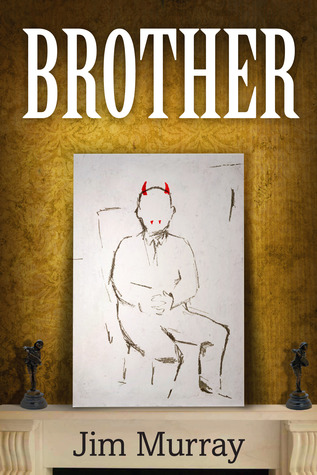
Review of ‘Brother’ by Jim Murray

Brother-cover

There are some books that cause me a real pang of regret as I approach the inevitable ending, knowing my relationship with the characters will soon be over. This is how I felt about ‘Brother’, although conversely I was so gripped by it that I had to continue reading the final tantalising chapters in one sitting. I finished it with tears in my eyes… although I’m not going to tell you why. I wouldn’t want to spoil your pleasure. Jim Murray had me hooked from the first few paragraphs, and his narrative kept on reeling me in, chapter after enthralling chapter.

The story line is deceptively simple – or appears to be at the start. Gradually we discover increasingly more of Dominic’s complicated sibling bond with his brother Spencer. Intrinsic to the story is the background to the ongoing feud between the brothers, and Dominic’s perception of Spencer as being the almost demonic changeling baby who burst his childhood Eden bubble and created all the family dysfunction that ensued. Of course in life, as in this novel, nothing is quite so straightforward. Many of Dominic’s perceptions are challenged and altered during the course of the book, as circumstances force him to reflect on the true picture of the past, as well as his various relationships, and the reasons for his own dysfunction.

Who are the real monsters in this novel? As I read on they kept emerging, or seeming to, only to be vindicated or displaced by others. I found myself wondering at one point: was it Dominic who was the real monster? Could he possibly be so out of touch with himself? I was intrigued by his strangely submissive response to the bully Mangan, who reappears like a hungry ghost from the dark vault of his boyhood and intimidates, entraps and manipulates him in adulthood, with dire consequences. This oddly compelling connection between them creates the pivotal thrust of the narrative. I found myself squirming as I read the later chapters, reminded of pantomimes where the audience shouts as the villain appears on stage: “Look out behind you!” The frustrated tension built up as Dominic remained almost willingly blinded by his prejudices and near trancelike acceptance of Mangan’s terrorizing tactics.

I never want to tell too much of the story when I write a review. For me, the quality of the writing and the depth of characterisation are what makes or breaks my enjoyment of a novel, however great the story line might be. Jim Murray is a superb story-teller – that much is a given. But what makes the book a 5* triumph for me is far more than that. His characters, made flesh by the interplay and dialogue between them, have a solid reality to them that made me feel I would recognise them if I met them, and know them deeply. He has a skill for deftly painting their portraits, layer upon layer, so that as a reader you come to understand them in the way that you do your friends: as rounded, utterly believable human beings. His psychological insights are offered with a light, almost invisible touch, which makes their impact all the more profound.

But what delighted me beyond all this was the beauty of Jim Murray’s language, his adroit use of simile and imagery throughout. I made some notes as I read, capturing some of my favourites on the wing:

“…fear re-emerging like a slick black insect unfolding from a pupa…”

“…each morning I entered the school yard as a small bird anticipating a lawn…”

“…many small scars like the slug trails of a hundred shitty days…”

“…my brain buzzed like a flatlining monitor…”

Jim Murray does not flinch from describing bad pennies in all their atrocious, unquenchable behaviour – but he also manages to evoke a degree of sympathy for them, without ever becoming sentimental. In ‘Brother’ he has skilfully woven an epic tapestry out of those traits we least like to own: jealousy, betrayal, murderous hatred – yet ultimately this is a book about love, which in real life is never an easy ride. I recommend this novel wholeheartedly, and I am confident that I’ll enjoy his new one, ‘Double Ugly’, just as much.

Jim Murray

You can find out more about Jim Murray and both his books at his Amazon Author page: http://www.amazon.com/Jim-Murray/e/B00CLOUMGK

Meet my character: blog tour

drowning

Are you perhaps wondering just what a blog tour is? So was I, until Lisa Devaney approached me and asked if I’d participate. I’m tempted to describe it as the blog equivalent of a chain letter, but since I have a never-with-a-barge-pole policy with them, I prefer to think of it as a game of tag, or even better, an author’s relay race – the idea being that you take the baton when it’s passed to you, run with it, then pass it on to other authors. So, to begin with, I extend my hand in gratitude to Lisa Devaney for holding the baton out to me.

Lisa has told me a little about herself, describing how she wrote and illustrated her own comic books as a child, created cartoon-inspired websites in the 90s, and took to the stage in New York City to perform in SLAM-poetry style. Even when spinning publicity campaigns for business clients, Lisa has always been enthralled by storytelling and the mediums that can be used to tell her stories. Her imagination finally led her to writing and self-publishing books, and her debut novel ‘In Ark: A Promise of Survival’ is earning 5* ratings and reviews. I’ll be reviewing it myself in due course. You can follow #InArk on Twitter, Instagram and Facebook and read more about Lisa and her novel at her website http://www.lisadevaney.com

In Ark cover for web

The idea of this blog tour is to introduce one of our own invented characters, and tell you more about them. With several novels and three short story collections to choose from, I had a queue of them clamouring for my attention, as soon as I began to muse upon which of them I’d pick. I had them draw lots in the end (some just point blank refused to sink that low) and the one who emerged as the winner is Fynn, the narrator of my novel ‘The Drowned Phoenician Sailor’ – typical of her, I might say, to somehow push herself to the front of the queue like that. Of all my characters she certainly is the one with the gift of the gab. She even insisted on writing the novel with her own distinctive voice, rather than let me tell the story.

So now, to comply with the blog tour rules, here are the questions and answers:

What is the name of your character? Are they a fictional or historic person?

Fynn is my character’s name – or is it Kaya? This is a ‘soul name’ bestowed on her in childhood by her ageing hippie mother, Phoebe. Fynn is sceptical and pragmatic, disdaining all things fanciful, but uses the alternative identity of ‘Kaya’ to infiltrate her therapist’s funeral, and the name sticks. She’s a fictional character – she’d probably even say that of herself. One of the things she is well aware of is how much we invent and reinvent ourselves throughout our life – and you might consider, therefore, that there is significance in the fact that it’s in using her ‘soul name’ that she discovers more of who she really is throughout the course of the novel.

When and where is the story set?

The story takes place in the here and now, although if I wanted to be fanciful and clever I’d remind you that the words now and here together make the word nowhere. I just love how words play with our mind (or is it the other way round?) The narrative also takes a bit of a detour into Fynn’s past, much as we all do when we reflect on our life right now and wonder how it was that we got to be exactly here. Our history is only as significant as what we learn from it, and we learn a great deal about Fynn from delving into hers – both childhood and more recent history. The novel is mostly set in Oxford, where she lives, and Cornwall, where her delightful mother, Phoebe, lives, and where she meets the mysterious Jack – another major player in the novel. He looked suitably enigmatic and just smiled when I asked if he wanted to take centre stage for this question and answer session. He knew I knew it was the last thing he’d want.

What should we know about her?

Fynn is strongly independent and a bit of a loner, although if you want to understand more of what she doesn’t reveal – often even to herself – pay particular attention to her relationship with her nefarious cat, Morpheus, which exposes an insecurity and vulnerability she wouldn’t want to own. At the start of the novel you’ll soon discover that she has been in therapy for two years – a last resort after twenty-five years of being haunted by her sister, Abby. She doesn’t believe in ghosts, which is a bit of setback for someone who manages within a few chapters to have two of them dogging her every move. She hasn’t been too successful in relationships, and she certainly isn’t looking for one now. But sometimes relationships – and fate – come looking for you.

What is the main conflict? What messes up her life

Fynn wants to know if her ghosts are real, or whether she is crazy. She is still grieving for her sister – but which of them truly is it who can’t let go? And it’s not just the loss of her sister Abby that haunts her, but everything that went before, and quite a lot since. Her therapist, Paul, had begun to guide her towards the heart of the matter, but then he went and died suddenly and created even more of a mess in her psyche. And what terrible timing – just when she needs him to help her sort out that mess more than ever. Her mother, with a long history of gullibility when it comes to lame dogs and lost souls, seems to have been entirely taken in by Jack, the oddball drifter she met on the beach in Cornwall. He is fast infiltrating himself into Phoebe’s life, and Fynn is suspicious of his motives and protective of her mother. And why is she so strangely drawn to Jack when she doesn’t even like him?

What is the personal goal of the character?

That’s an easy one for me to answer, although I don’t think Fynn herself would be able to articulate it – not at the start of the novel anyway. She sees herself as a free spirit who doesn’t want to be tied down – even though she’s beginning to realise she uncharacteristically tied herself down two years before by adopting a cat and embarking on therapy. What she longs for, couched in denial within her unconscious, is freedom from the pain of grief, and everything that lies behind it: guilt and regret, frozen in time. Isn’t something like that what we all long to be free from? We carry the grief for our own unlived life every day, whether or not we know it. We want to be loved for who we are, and to stand fearlessly in our truth, rather than hide behind an identity that doesn’t honestly reflect who we are. This is very much the underlying theme in the novel, and you will discover in reading it whether this is resolved for Fynn in the end.

What is the title of this novel, and can we read more about it?

‘The Drowned Phoenician Sailor’ is the title – it’s been published on kindle since January 2014. You can read more about it and what led to me writing it on my blog….. and on my website…. and on Goodreads …and of course on Amazon…. where you can also ‘look inside’ and decide whether Fynn’s voice and story is one that speaks to you. All those 5* reviews can’t be wrong!

http://www.amazon.co.uk/dp/B00GPN71GM

drowned_pic

Today I am nominating two talented authors whose work has excited, fascinated and delighted me in very different ways – they will in turn carry the baton forward and tell you more about their main characters:

Brett Hawkins

Brett lives with his angelic wife, 2 sons and 2 dogs in the Northwestern suburbs of Sydney. After 20 odd years of sailing the high seas of the corporate world plus another 5 running his own business Brett finally made his decision. That thing, the voice, you know, the one that’s been whispering in his ear ever since he was a teenager. Follow your passion the nagging voice kept saying until eventually in late 2013 he listened. Brett’s reunion with his lifelong passion has been an elated one that has spawned his first novel in the making. Entitled ‘The Stars of the Soul’ it is a provoking Science Fiction/Fantasy adventure spanning 1400 years of man’s eternal search for his soul. For sneak peeks and to discover more of Brett’s writing you can visit his blog: Brett’s Future http://www.BrettsFuture.com

The-Stars-of-the-Soul-book cover thumbnail

Robin Chambers

Once upon a time Robin was born in Bootle, Liverpool. He wanted to follow in the footsteps of J.R.R. Tolkien and C.S. Lewis but instead was plunged into the maelstrom of inner city education. Even so, he found time to write children’s stories, published by Penguin in the 1970s. He returned to his northern roots after 14 years of headship in Hackney and in 1993 met his wonderful wife Amy. In 2008 they left for a life by the western shores of the Caribbean. Surviving a murder attempt by local thugs in November 2010, Robin realised he could have died without accomplishing a cherished ambition. They returned to the UK and he began work on ‘Myrddin’s Heir’: the epic story that will be his legacy. It took three years to write the first four books and Book 5 was published in April 2014. They are all on kindle at Amazon for just 99p. This magical story is ideal for bright children from 10–110 years of age – longer than ‘The Lord of the Rings’, longer even than the entire ‘Harry Potter’. To complete it Robin reckons he needs to live another 15 years. He has to finish it, because only he knows how it ends… You can find his website at http://www.myrddinsheir.com

A Wizard of Dreams-cover

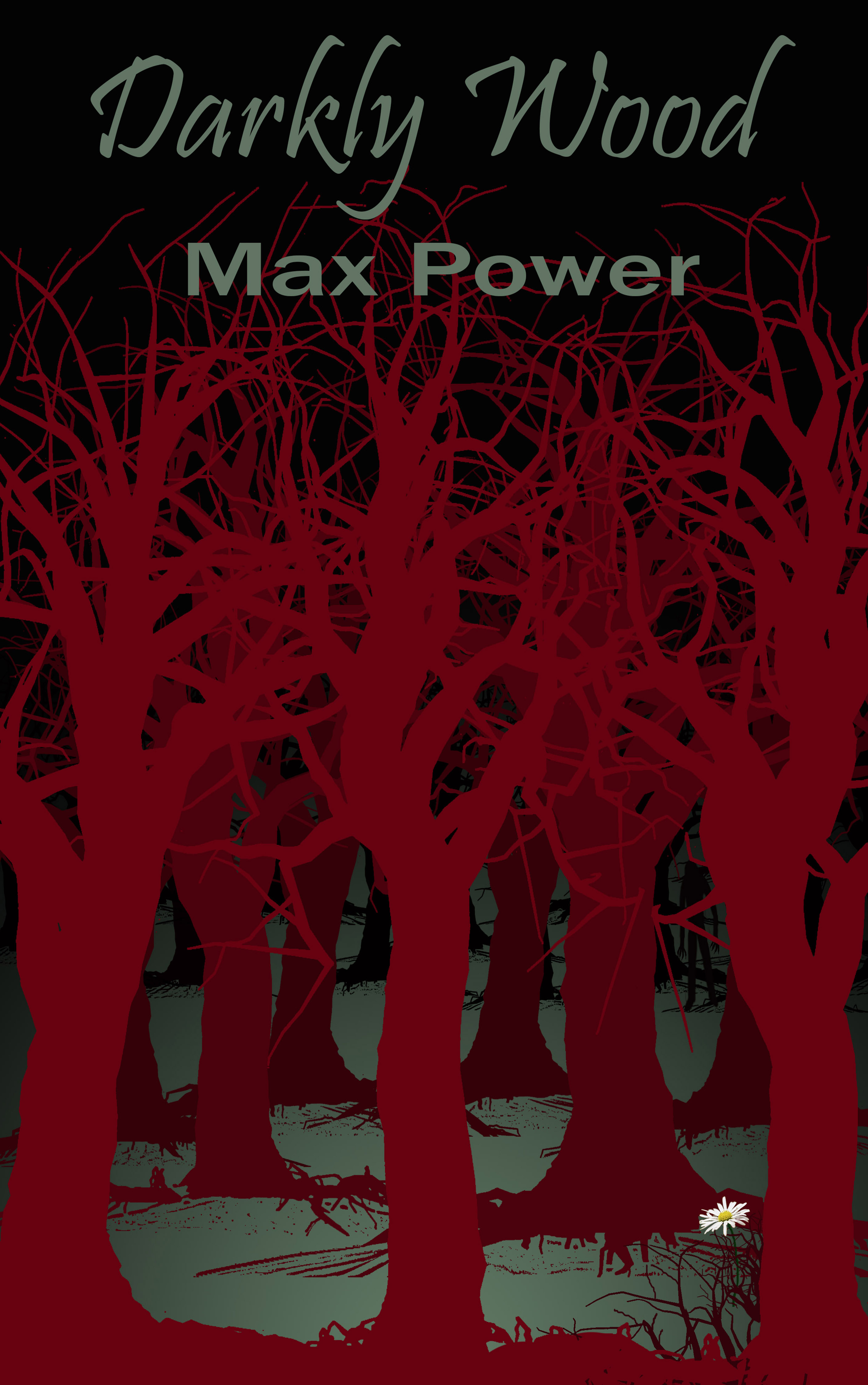
Review of ‘Darkly Wood’ by Max Power

Darkly wood cover revampt and resized

Entering Max Power’s mesmerizing novel is like venturing into Darkly Wood itself. Just as the book within the book, discovered by the heroine Daisy May, begins as a seemingly innocuous tale describing the unfortunate history of those who have wandered past its outskirts, so does the bewitching narrative of the novel prove increasingly sinister, the further in those reckless enough to cross the initial boundaries go.

I was lulled to begin with – just as Daisy was lulled – intrigued by this apparently random collection of tales of people who had one way or another found their dreadful destiny waiting deep in the heart of Darkly Wood. It reminded me, during the first enticing chapters, of those many pleasant hours I spent as a child, sitting by the fire listening to my grandmother recount the old gossipy stories of people she had known – characters whose quirky personalities and drama-soaked lives remained etched on my memory. I therefore stepped boldly and eagerly through the early pages of ‘Darkly Wood’, warmed by the distinctive, lyrical voice of the author and not too alarmed by the increasingly macabre turns of the individual histories of the residents of the village of Cranby, and the narrative itself.

As the novel progressed Daisy’s own story gathered momentum and the account of the history of Darkly Wood was a task taken over by the mysterious Benjamin, who became her companion. By now the novel had taken on certain aspects of ‘Alice in Wonderland’ – but a very dark ‘Alice in Wonderland’ (which is, let’s face it, already pretty dark.) I also by now realised that the magic of the story ‘Darkly Wood’ had ensnared me as surely as if I’d been stumbling my way through its dense, shape-shifting forest. There was no discernible exit – only the mystery unfolding, and my increasing fascination to find out how Daisy’s story was resolved. I was taken on a journey as convoluted as a densely thicketed maze, with unexpected openings and suddenly blocked pathways. The novel was Darkly Wood, I realised. Its darkness gathered as I continued to turn the pages with escalating avidity, never sure, even to the very last pages, what would happen next.

But despite your inevitable curiosity I am not going to tell you what happens to Daisy – or to Benjamin – or describe the monster that lurks in Darkly Wood, as fascinating in both essence and history as the Minotaur that is chained, trapped in the very heart of the labyrinth in the ancient Greek myth. That same mythical quality hangs in the air in Darkly Wood – the sense of otherworld and allegory which we instinctively feel drawn to, however terrible. What I will do is urge you to read the book, to allow the experience of it to beguile you and menace you and ultimately touch you to the core with its poignant and unexpected ending. I am giving Max Power’s novel 5* and have already put his second novel ‘Larry Flynn’ on my reading list.

dwyou

You can find links to Max Power’s novel ‘Darkly Wood’ and learn more about him at http://www.amazon.com/Max-Power/e/B00LGPWHN6

Review: The Song of the Mockingbird by Bill Cronin

mockingbird1-187x300

Books are like people, in my experience, in that either there is an immediate rapport that can lead to falling in love by chapter 2 and an affair of the heart you never want to end, or a slow burn affection that grows steadily throughout its pages. Sometimes, if you’re lucky, it can be a combination of both. Those are the books you best remember, even many years after having read them. I so wanted Bill Cronin’s book to be one with which I fell in love. The promising subject matter was all there, guaranteed to entice me: the blocked writer with a troubled present and a dark past, scarred with secrets to be uncovered in order to release him from his spell of depression. But it didn’t quite happen for me. About three-quarters of the way through the book there was a moment when I thought it would, when the narrator, Jack McNamara, spoke of the “one true sentence” that he strived for, just as Hemingway had. I believed then that the one true sentence would emerge, either in the dialogue or the interaction between the characters, or in my relationship as a reader with the main protagonist – but although it came close, it somehow missed the mark.

This is my subjective take on it, however, and I am not declaring the book less because of it. I have given it 4 stars, which I think it merits. It would have earned 5* for me if there had been a greater depth of characterisation, and that alchemical magic that occurs between novel and reader that brings about emotional involvement. There were opportunities to expand on the relationship between Jack and his mother, for instance, and although the book was psychologically well observed I never quite connected enough with the central character. The slow burn effect was there, and I warmed to him, and to his half sister, as more of each of them and their history was revealed, but ultimately I remained unconvinced by the emotional veracity of their relationship. I wanted to know more, and to really feel along with Jack as the trickiest aspects of the truth were uncovered. To elicit genuine emotions in the reader is a skill, and I would like to read more of Bill Cronin’s books, as I believe he can do it. As it is, this undoubtedly literary novel is well crafted, well written, and tackles without flinching difficult subjects and those sticky, inexplicable dynamics that fester on in families throughout generations.

The story begins by describing Jack’s dilemma – as a successful well-established author who has been paid a large advance for his next novel, he finds himself unable to write. Whether this creative hiatus has been caused by his slippage into depression, or the other way round, it has become an inescapable cycle of despair. His marriage has been badly scuppered by the lack of attention he has felt able to pay it and as a result has now floundered on the rocks. His wife Emily leaving him is the catalyst for Jack to begin a serious interrogation within himself as to the reasons for his angst, the roots of which seem to be firmly anchored in the various traumatic events that took place during the summer when he was an impressionable boy of 14. This was the time of the inauguration of his career as a writer, when his first short story was published. By then Jack’s mother’s long-time obsession with the work of Ernest Hemingway had transferred itself to him, and with his mother’s encouragement he had continued to identify with Hemingway in the years since. Jack’s journey of self-contemplation in present time continues both inwardly and outwardly as he sets out to track down his long lost half sister, Billie, hoping she will provide the answers to past secrets which have remained locked away since his mother’s death. As we journey with him, we learn much about Jack’s relationship with his judgmental, disparaging, emotionally closed off father, with whom Jack aches to connect. Is Jack’s current inability to write something to do with the fact that his father has never valued writing as a career, and thereby by extension Jack himself? The long undeclared tension between them reaches a climax towards the end of the book. Piece by piece we build up the picture of Jack’s blocked emotions, and by then we have come to hope for some kind of catharsis to release him, not knowing to the very last whether this will bring his wife back or free him into a future in which his anger and confusion about the past have been resolved. You will have to read the book yourself to find the answer – a reading experience you will not regret.

I felt throughout that Bill Cronin dealt with this potentially hazardous psychological material well, and he certainly knows how to tell a tale. His descriptions of the city and country landscapes were superb. So why not give the novel 5*? I suppose I was left wishing this had been a longer, richer and more emotionally and psychologically satisfying novel. I think he has such a book in him, and I’m looking forward to reading his next book, which I understand is already work in progress.

Bill Cronin IMG_83941-472x295

You can find more about Bill Cronin at his website: http://www.billcroninwrite.com